

We don't sell AI. We make it useful.
Most modern monitoring platforms include anomaly detection. On its own it produces alerts. With good set-up, analyst checks and a clear route into your work orders, it prevents failures. That second part is what we do.
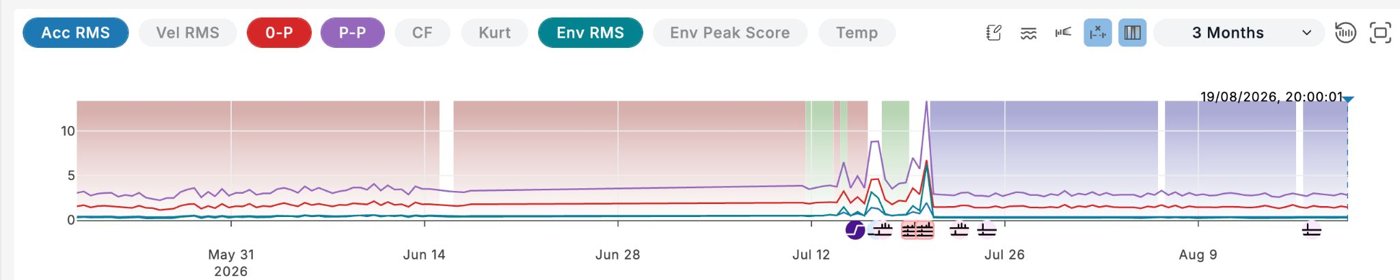
AI flags change. Engineers decide what to do.
We do not build our own AI models. We work with the analytics built into the platforms we deploy, and we choose platforms whose models suit your machines.
The value comes from the work around the model: a good baseline, sensible alarm limits, a qualified analyst checking each alert, and a clear action in your maintenance system. Without that, AI becomes one more source of noise.
How we make it business as usual
What we measure
If AI is helping, these numbers improve. We track them.
Faults caught early
Confirmed faults found before failure.
False alarm rate
Alerts that needed no action.
Alert to action
Time from alert to work done.
Cost avoided
Estimated repair and downtime saved.
Common questions
Do we need to be a big site to benefit?
No. A handful of critical machines with good set-up can pay back quickly, as at JG Pears.
Will AI replace our analysts?
No. It points them at the right machines sooner. Decisions stay with people.
Can you work with AI tools we already have?
Yes. We review how they are set up and connect their alerts to your maintenance process.
Drowning in alerts?
We will review your current set-up and show you what to keep, tune or switch off.